

米兰时尚学院
Via Broggi 7 20129 Milano ITALY
电话 0039.02.26822730
传真 0039.02.700445714
邮箱 info(at)fashioncampus.it
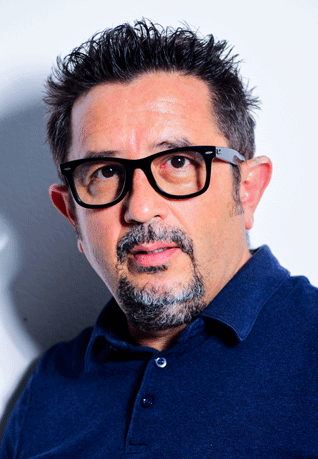

关于 Angelo Russica

米兰时尚学院
在米兰学习时尚后,Angelo Russica首次进入时尚界,协助Giorgio Correggiari,在那里他遇到了Domenico Dolce和Stefano Gabbana(Dolce & Gabbana)。他不得不离开去服兵役一年。他一回来就在意大利公司Barbas(男装系列)工作,此后他有了他最激动人心的职业经历之一: 他开始为詹尼-范思哲担任助理设计师。他工作了4年,参与了女装和男装系列: Genny, Spazio和Versus。
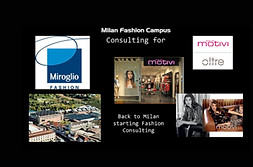
在这段经历之后,他离开意大利到西班牙工作了4年: 在这里,他在马德里的Induyco - El Corte Inglés工作。一旦他回来,他开始为Gruppo Marzotto, Miroglio Vestebene, Gruppo Max Mara担任顾问,并在日本与最重要的服装制造商世界公司之一King Company合作。

Dolce & Gabbana


Giorgio Correggiari
Gianni Verscae


From Gianni Versace's Atelier to Global Fashion Education: The Journey of Angelo Russica
Born and raised in Switzerland, Angelo Russica moved to the Monza area near Milan before beginning a remarkable journey through Italian fashion — from Gianni Versace's creative studio to Milan Fashion Week, international creative direction and the development of a global approach to fashion education.
MILAN, ITALY — Fashion history is often told through the names of celebrated designers, iconic collections and unforgettable runway moments. Yet behind these achievements lies an entire generation of creative professionals whose experiences have helped shape the industry.
Angelo Russica, Italian fashion designer, former creative director, international consultant, fashion lecturer and founder of Milan Fashion Campus, belongs to a generation that witnessed the transformation of Italian fashion from the inside.
Born and raised in Switzerland, Russica later moved to Italy, settling in the Monza area, just outside Milan. This relocation marked an important turning point in his life, bringing him closer to one of the world's most influential fashion capitals and opening the door to a career that would eventually extend far beyond Italy.
His professional journey began in the creative studios of Milan during the 1980s, continued through major industrial fashion companies in Europe, and eventually expanded to Japan, China and international educational projects.
Along the way, he experienced the creative freedom of working with Gianni Versace, the responsibility of industrial fashion production, the challenges facing emerging designers and the complexity of leading international collections.
Today, through Milan Fashion Campus, international lectures and educational partnerships, Russica has transformed decades of professional experience into a mission: making Italian fashion knowledge accessible to students, entrepreneurs and professionals around the world.
From Switzerland to Milan: The Beginning of a Creative Journey
Growing up in Switzerland before moving to the Monza area in northern Italy, Angelo Russica developed his professional ambitions close to Milan, a city that was becoming an increasingly influential centre of international fashion.
The move placed him within reach of an industry experiencing extraordinary creative and commercial growth.
During the 1980s, Milan was establishing itself as one of the world's leading fashion capitals, with Italian designers redefining the international perception of style, luxury and ready-to-wear fashion.
After completing his fashion studies in Milan, Russica entered the professional world through the design studio of
Giorgio Correggiari.
It was there that he had the opportunity to work during the same period as two emerging talents who would later become internationally recognized: Domenico Dolce and Stefano Gabbana.
Sharing that creative environment offered Russica an introduction to the professional realities of fashion design, from creative research to collection development and teamwork.
Those formative experiences established the foundations of a career that would connect creative experimentation, industrial expertise and international business.
1986: Recognition at the National Wool Design Competition
An important early milestone came in 1986, when Angelo Russica was selected to participate in a fashion design competition organized by the Segretariato Nazionale della Lana.
Russica was among the competition's winners, earning the opportunity to participate in a fashion presentation connected to Pitti Filati.
For a young designer, the recognition represented an important professional achievement.
It provided the opportunity to present his creative work beyond the confines of a design studio and engage with the wider Italian textile and fashion industry.
The experience also reinforced an idea that would remain important throughout his career: creative talent needs opportunities to become visible.
A strong design concept is essential, but so is the possibility of presenting that work to an audience capable of recognizing its potential.
Working with Gianni Versace: When Creativity Had No Limits
Following his early professional experiences, military service and work with Italian menswear company Barbas, Russica entered one of the most influential chapters of his career.
He became an assistant designer to Gianni Versace, contributing over several years to womenswear and menswear collections associated with Genny, Spazio and Versus.
Working within Versace's creative environment provided firsthand experience of a designer whose artistic identity was transforming international fashion.
Versace was known for his bold aesthetic, vibrant colours, striking silhouettes and unconventional combinations.
Yet what Russica remembers most vividly is not simply the visual extravagance of the collections.
It is Versace's extraordinary confidence in his creative vision.
"If Gianni liked an idea, nothing could stop it. It would make its way onto the runway," Russica recalls.
For a young designer, observing that determination was an invaluable lesson.
Versace demonstrated that fashion creativity requires more than talent. It also demands conviction, independence and the courage to challenge conventional expectations.
That philosophy left a lasting impression on Russica and continues to influence his approach to fashion education.
He believes that aspiring designers should not simply learn to reproduce established trends or follow predetermined formulas.
They must develop their own creative identities, trust their judgment and acquire the technical knowledge necessary to bring original ideas to life.
Madrid: Discovering the Human Responsibility Behind Fashion
After his experience with Gianni Versace, Russica moved to Madrid, where he spent four years working with Induyco, the industrial fashion group associated with El Corte Inglés.
The transition introduced him to an entirely different dimension of the fashion industry.
At Versace, he had witnessed the power of individual creativity.
At Induyco, he encountered the extraordinary scale of industrial fashion production.
What impressed Russica most was the number of people involved in the company's operations.
He remembers thousands of employees working within a vast industrial structure, each contributing to a system that supported many families.
"I was deeply impressed by the thousands of people working at Induyco. I felt an enormous responsibility to give my very best, because I knew that so many families depended on the fashion industry for their livelihoods."
This realization changed his understanding of the profession.
Fashion was no longer simply about creating something beautiful or developing a successful collection.
It was also about responsibility.
Behind every garment were production teams, technical specialists, suppliers, commercial departments and people whose economic security depended on the success of the business.
If Gianni Versace taught him the importance of believing in a creative vision, Induyco taught him the responsibility of transforming that vision into a real product.
From Italian Fashion Houses to International Markets
Russica continued developing his professional career through consulting collaborations with major Italian fashion organizations, including Marzotto, Miroglio Vestebene and Max Mara.
These assignments strengthened his understanding of collection development, product positioning, industrial processes and the commercial realities of the fashion industry.
His professional activities also expanded internationally.
In Japan, Russica collaborated with companies including World Co. Ltd and King Company, gaining experience in a market characterized by its distinctive approach to quality, product development and consumer expectations.
His international consulting activities also included collaborations with Lancy Group in China.
Working across different markets broadened his perspective on fashion as an international industry.
He recognized that successful design requires an understanding of cultural differences, commercial expectations and the relationship between creativity and product development.
January 4, 1996: The Beginning of a Different Vision of Fashion Education
By the mid-1990s, Russica had developed a broad understanding of the differences between academic fashion education and the realities of working within the industry.
His experience had taken him through creative studios, major fashion houses, industrial organizations and international markets.
He believed this knowledge could be particularly valuable to aspiring designers and international students.
Russica identifies January 4, 1996, as the beginning of his educational project.
His vision was to develop a different concept of fashion education: shorter, more focused courses, personalized attention and practical methods connected to professional experience.
International students were central to this idea.
Russica understood that many aspiring fashion professionals wanted to experience Italian fashion education but could not necessarily commit to several years of traditional academic study in Milan.
The project would eventually evolve into Milan Fashion Campus, initially through online fashion education and subsequently through a physical school in Milan.
However, his educational ambitions did not mean abandoning his own creative career.
In 1997, another important opportunity would bring him back onto the runway, this time presenting his own collections.
1997: Selected by the Camera Nazionale della Moda Italiana
In 1997, Angelo Russica was selected by the Camera Nazionale della Moda Italiana to participate as an emerging designer in its Young Fashion Designers initiative.
The recognition provided him with three opportunities to present his own collections during Milan Fashion Week.
For a designer who had previously worked behind the scenes with important fashion houses, this represented a significant professional achievement.
He was no longer contributing exclusively to collections created under the names of established designers.
He now had the opportunity to express his own creative identity and present his personal vision of fashion.
Yet the experience also revealed a frustrating reality.
Milan Fashion Week attracted international journalists, buyers, photographers and celebrities, but media attention was not necessarily distributed equally.
Established fashion houses and famous personalities received extensive coverage, while young designers often struggled to have their work noticed.
Rather than accepting this situation, Russica decided to make a provocative statement.
The Madonna Lookalike: A Provocation Against Celebrity Culture
During one of his Milan Fashion Week presentations, Russica introduced an unexpected element into the event.
He invited a Madonna lookalike, deliberately creating the appearance of a celebrity presence around his fashion presentation.
The idea was intended as an ironic criticism of the fashion media.
Russica wanted to demonstrate how journalists could dedicate considerable time to famous personalities while paying much less attention to the work of emerging designers.
The presence of the Madonna lookalike attracted curiosity and generated attention around the event.
But for Russica, the reaction also reinforced the very point he wanted to make.
Why should a young designer need a celebrity-related spectacle simply to encourage journalists to look at an original collection?
The episode reflected a broader tension within fashion: the relationship between creative talent, media visibility and celebrity culture.
It was also a commentary on an industry in which the attention surrounding fashion could sometimes overshadow the creative work itself.
The experience reinforced an important conviction.
Emerging designers need more than talent. They need opportunities, visibility, professional knowledge and the ability to communicate their creative identity.
Creative Director in China: From Trends to Collection Strategy
Another significant chapter of Russica's international career was his collaboration with Dalessi Group in China, where he served as Creative Director for the company's main fashion line.
The position involved responsibilities that extended beyond designing individual garments.
Russica was responsible for defining the overall seasonal creative direction, identifying international fashion trends and establishing the stylistic concepts that would guide future collections.
Working with a team based in China, he provided the creative vision and seasonal trend direction, while the local staff followed the subsequent development and execution of the collections.
The position required the ability to translate international fashion influences into a coherent creative strategy adapted to the company's market.
For Russica, being a creative director meant establishing a creative vision that an entire team could interpret and transform into a collection.
This experience brought together trend forecasting, creative leadership, international communication and collection strategy.
Milan Fashion Campus: Turning Professional Experience into Education+
As his educational project evolved, Russica increasingly focused on creating a fashion school that would reflect the professional reality he had experienced throughout his career.
Milan Fashion Campus developed around the idea that fashion education should be practical, flexible, personalized and connected to the industry's expectations.
In a 2014 interview with Be Global Fashion Network, Russica summarized a central part of his educational philosophy:
"I think that it can be useful for them to know what the fashion world expects of them."
The statement reflects his professional experience.
From Gianni Versace came the importance of creative confidence.
From Induyco came the understanding of industrial responsibility.
From Milan Fashion Week came the realization that talent also needs visibility.
From international consulting and creative direction came the importance of understanding different markets and professional environments.
Today, Milan Fashion Campus offers intensive courses in fashion design, personal styling, editorial styling, trend forecasting, portfolio development and related disciplines.
The school's flexible format, with in-person courses generally beginning every Monday, welcomes international students, aspiring professionals, entrepreneurs and people considering a career change.
Fashion Lectures: Sharing the Italian Fashion System with International Audiences
Russica's educational activities have expanded beyond Milan Fashion Campus through fashion lectures, professional seminars, specialized workshops and presentations for international students and business professionals.
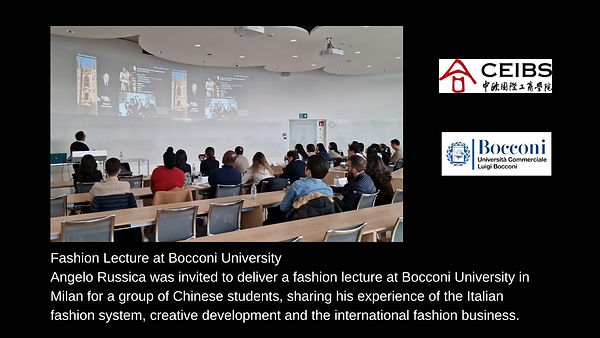
One example was a Fashion Lecture held at Bocconi University in Milan for participants from CEIBS – China Europe International Business School.
During the session, Russica introduced an international business audience to the professional structure and culture of Italian fashion.
Drawing on his experience with Gianni Versace and international fashion companies, he explored the relationship between Italian creativity, luxury, industrial production, brand identity and business development.
For Russica, such lectures represent an opportunity to connect Italian fashion expertise with international business education.
Beyond lectures for university students and established professionals, Milan Fashion Campus has also developed fashion workshops specifically designed for younger generations. Among these initiatives were educational workshops organized for groups of approximately 30 teenagers from China, offering them an early introduction to Italian fashion, creativity, styling and design.
For Russica, introducing young people to fashion is particularly meaningful. He believes that aesthetic awareness, personal taste and creative sensitivity can be cultivated from an early age. Experiencing Italian fashion while still young offers students an opportunity to discover the cultural foundations of Made in Italy style, develop their ability to observe and interpret fashion, and begin forming their own creative identities.
The purpose of these workshops is not simply to teach teenagers how to dress or follow trends. It is to encourage curiosity, visual awareness and an appreciation of design, craftsmanship and creativity — values deeply connected to Italian fashion culture.
"Italian style is not something that should only be introduced when someone becomes a professional. A sense of style, creativity and aesthetic appreciation can begin developing at a young age," reflects the philosophy behind Russica's approach.
By welcoming young international students alongside university participants and industry professionals, Milan Fashion Campus demonstrates an educational vision that embraces different generations — from teenagers discovering fashion for the first time to experienced professionals seeking to deepen their expertise.
These activities also reflect his belief that understanding fashion requires more than knowing famous designers and luxury brands.
It means understanding the creative, technical, industrial and cultural systems behind them.
Sochi, Russia: Introducing the Italian Fashion System to International Professionals
Russica's educational activities have also taken him to international fashion meetings and professional events.
In Sochi, Russia, he participated in a meeting for fashion stylists, where he presented the Italian fashion system to an audience of professionals.
His lecture explored the relationship between Italian creativity, design culture, professional education and industrial development.
For Russica, these events provide opportunities to introduce international audiences to a broader interpretation of Italian fashion.
Its success is not based exclusively on luxury brands or famous designers.
It also depends on an extensive network of creative studios, textile manufacturers, technical specialists and businesses.
Bangkok: Supporting Former Students as Fashion Entrepreneurs
Another distinctive aspect of Russica's educational activities is his continuing relationship with former students.
Some graduates return to their home countries and establish businesses in personal styling, image consulting, fashion education or related creative fields.
As their professional activities develop, their educational needs may change.
Recognizing this, Russica has created specialized training programmes for former students seeking to expand their skills and professional services.
One example comes from Bangkok, Thailand, where he travelled to provide customized fashion training connected to the professional development of a former student.
For Russica, this approach reflects an important principle: fashion education should evolve alongside the individual.
The needs of a beginner are different from those of an entrepreneur managing an established activity.
Uzbekistan: When a Former Student Brings Italian Fashion Education Home
One particularly meaningful example of the international development of Milan Fashion Campus comes from Uzbekistan, where a former student has transformed her educational experience into a local business opportunity.
Through a licensing agreement, Milan Fashion Campus made its Women's Fashion Styling Course available to the former student, allowing her to teach the school's professional methodology in her own country.
The initiative has become a source of considerable satisfaction for the former student, who can develop her educational activity using a structured training system based on Italian fashion expertise.
But the significance of the project extends beyond the business opportunity itself.
It addresses a practical challenge faced by many aspiring fashion professionals around the world: the cost and difficulty of travelling abroad to access specialized education.
For students in Uzbekistan, travelling to Milan may involve international flights, accommodation expenses, time away from work or family and other financial commitments.
Through the locally delivered programme, they can instead access Italian fashion styling knowledge and the educational methodology of Milan Fashion Campus without having to travel to Italy.
This offers advantages for both the local entrepreneur and her students.
The former student can build and develop her own educational business using a licensed course structure, while participants can study fashion styling within their own country.
For Russica, the project represents a particularly meaningful continuation of his original educational vision.
A former student is no longer simply applying what she learned. She has become an entrepreneur who is sharing that knowledge with others.
The Uzbekistan project reflects a central idea behind Milan Fashion Campus: Italian fashion education should not be limited by geography. Knowledge can travel even when students cannot.
Expanding Italian Fashion Education Beyond Milan
The Uzbekistan initiative forms part of a wider international development strategy for Milan Fashion Campus.
The school's Women's Fashion Styling programme has also been introduced through educational collaborations in markets including Mongolia and Thailand.
These activities reflect Russica's ambition to make Italian fashion knowledge accessible to students and professionals internationally.
The goal is not simply to distribute course materials abroad.
It is to communicate a professional methodology that combines creativity, practical styling skills, technical knowledge and an understanding of fashion as an international industry.
For Russica, the opportunity to see former students become independent entrepreneurs and educational partners is an important source of professional satisfaction.
Students can become professionals, professionals can become entrepreneurs, and entrepreneurs can create new educational opportunities in their own communities.
2025: Participating in the Global Fashion Conference in China
In November 2025, Angelo Russica participated in the Global Fashion Conference 2025, held in Humen, Dongguan, China.
The event brought together representatives of fashion organizations, designers, entrepreneurs and industry professionals from different countries.
The conference provided an international platform for discussions about the evolution of the fashion industry, including technological innovation, sustainability, international collaboration and industrial transformation.
For Russica, participation in international industry events is a continuation of his professional journey.
Having worked across European and Asian fashion markets, he remains interested in understanding how the industry is evolving and how different countries are responding to new challenges.
Remaining connected to the industry is, for Russica, an essential part of remaining relevant as an educator.
Fashion education must evolve alongside the industry itself.
From Switzerland to the International Fashion World: A Lasting Lesson
Looking back at Angelo Russica's career, the different chapters reveal a consistent relationship between creativity, opportunity and professional responsibility.
Born and raised in Switzerland before moving to the Monza area, Russica began building his career within the creative environment of Milan.
His early experience at Giorgio Correggiari's studio introduced him to a generation of designers who would influence international fashion.
The recognition received in 1986 connected him with the wider Italian fashion and textile industry.
Working with Gianni Versace taught him the importance of believing in a creative idea.
His experience at Induyco revealed the human and industrial responsibility behind fashion.
Presenting his own collections during Milan Fashion Week in 1997 showed him both the opportunities and obstacles facing independent designers.
His work in Japan and China broadened his international perspective, while his role as Creative Director at Dalessi Group strengthened his experience in trend forecasting, collection strategy and creative leadership.
His educational activities, lectures and international collaborations later allowed him to transform those experiences into knowledge shared with others.
Projects such as the Women's Fashion Styling Course licensing initiative in Uzbekistan demonstrate a further evolution of this philosophy.
The students who once travelled to Milan to acquire professional knowledge can become entrepreneurs themselves, bringing Italian fashion expertise to their own countries and creating new opportunities for others.
Today, Russica's philosophy is shaped by the belief that fashion education should do more than teach technical skills.
It should encourage creativity, develop independent thinking, introduce professional responsibility and help students understand the realities of an international industry.
His journey is not simply the story of a designer who became an educator.
It is the story of someone whose path began in Switzerland, developed in the creative heart of Italian fashion and extended across continents — transforming professional experience into opportunities for future generations.
From Switzerland to Milan, from Gianni Versace's atelier to Milan Fashion Week, and from international creative direction to global fashion education, Angelo Russica's career carries an enduring message: creativity deserves to be seen, talent deserves an opportunity, and professional knowledge becomes more valuable when it is shared.
About Angelo Russica
Angelo Russica is an Italian fashion designer, former creative director, international consultant, fashion lecturer and founder of Milan Fashion Campus, an independent fashion school based in Milan, Italy.
Born and raised in Switzerland, he later moved to Italy, settling in the Monza area near Milan, where he began developing his professional path in the Italian fashion industry.
His career began in the 1980s at the design studio of Giorgio Correggiari, where he worked during the same period as Domenico Dolce and Stefano Gabbana.
In 1986, he was among the winners of a competition organized by the Segretariato Nazionale della Lana, participating in a fashion presentation connected to Pitti Filati.
He subsequently worked as an assistant designer to Gianni Versace, contributing to collections associated with Genny, Spazio and Versus.
His career also includes international consulting activities for fashion organizations including Induyco–El Corte Inglés, Marzotto, Miroglio Vestebene, Max Mara, World Co. Ltd, King Company and Lancy Group.
In 1997, Russica was selected by the Camera Nazionale della Moda Italiana as a Young Fashion Designer, receiving three opportunities to present his own collections during Milan Fashion Week.
He later served as Creative Director for the main fashion line of Dalessi Group in China, defining seasonal trends and creative direction in collaboration with a local development team.
His educational project began on January 4, 1996, and subsequently evolved into Milan Fashion Campus, offering intensive fashion courses in Milan, online education and international training programmes.
His international educational activities include a Fashion Lecture held at Bocconi University in Milan for participants from CEIBS – China Europe International Business School, professional presentations in Russia, customized fashion training in Thailand and educational collaborations in several international markets.
Through licensing partnerships, Milan Fashion Campus has also introduced its Women's Fashion Styling Course in Uzbekistan, supporting a former student in developing her own local educational activity.
In November 2025, Russica participated in the Global Fashion Conference in Humen, Dongguan, China.




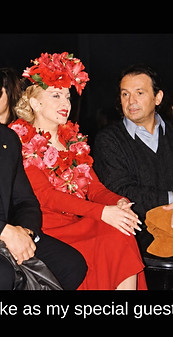




In 1997, I presented Milan’s first democratic fashion show on Via della Spiga, open to everyone. My message to fashion journalists was simple: “If you don’t have time to come and see a young designer, I’ll come to you.”


A Deep Dive into Milan Fashion Campus
Today, we're setting our sights on one of fashion's most exciting hubs: Milan. But instead of just taking in the sights, imagine actually learning right in the heart of it all at Milan Fashion Campus. If you’re passionate about fashion, this place offers something truly special: short, intensive courses that make it possible to dive into the world of fashion without committing years of your life.
Fashion Education Made Accessible
What stands out about Milan Fashion Campus is how they understand that not everyone can afford to drop everything for traditional, long-term fashion school. With their compact, boot camp-style courses, they cater to people from all walks of life—whether you're just curious about fashion, looking to switch careers, or already a seasoned professional in the industry. Imagine sitting in a classroom where a high school graduate might be working alongside a veteran industry pro. The blend of experiences and backgrounds creates a dynamic learning environment where fresh ideas meet seasoned perspectives.
A Learning Environment Like No Other
The variety of students at Milan Fashion Campus spans across generations, from teens just starting out to experienced professionals in their 40s. Picture a seasoned buyer giving feedback to a young design student passionate about sustainability. The rich diversity creates room for so many unique collaborations, conversations, and opportunities for growth that you wouldn’t get from a textbook.
Courses That Start Every Monday—Talk About Flexibility!
One of the best things about Milan Fashion Campus? Flexibility. Courses start every Monday. Yep, no semesters, no long waits—just pick a date and jump right in. Whether you have a free week or a whole month, you can fit some serious fashion learning into your schedule. And with courses like Streetwear Design, Artificial Intelligence in Fashion, or even a Fashion Week Experience in Milan, there’s something to ignite the creative spark in every fashion lover.
Meet Angelo Russica: The Vision Behind the Campus
Now, let’s talk about the mastermind behind it all—Angelo Russica. If the name doesn’t ring a bell, it should. Angelo has worked with fashion giants like Dolce & Gabbana, Gianni Versace, and Max Mara, contributing to iconic lines like Versus and Spazio. His years of experience working with the best in the business are distilled into these courses, offering students insights and knowledge you simply can't find anywhere else. It’s like having a masterclass in fashion, guided by someone who’s seen it all.
Customizing Your Fashion Education
Milan Fashion Campus goes even further by offering personalized courses. Ever wanted a bespoke education experience? Now you can have it. Their Fashion Incentive Workshops let you tailor your learning to your specific goals and interests. It’s like having a custom-made suit but for your fashion education. This level of personalization is rare, and it shows just how invested the campus is in helping students reach their individual aspirations.
Transparent and Diverse: A Community Built for Learning
Another standout aspect is how upfront they are. Whether it’s about costs or instructor qualifications, Milan Fashion Campus lays it all out. They’re proud of what they offer, and they’re not afraid to show it. The transparency helps build trust, which is especially important in a field like fashion where reputation is everything. And let’s not forget the diversity—they welcome students from all backgrounds, encouraging a mix of experience, age, and culture. It’s a true melting pot of creativity.
Conclusion: Dreaming of Milan, But Fashion Inspiration is Everywhere
Whether you’re jetting off to Milan or staying local, Milan Fashion Campus reminds us that fashion learning is within reach for everyone. And if Milan isn’t an option right now, there are still plenty of ways to tap into that energy—whether it’s through local designers, workshops, or even online resources. Fashion is a world that’s always evolving, and there’s always something new to discover.
So whether you’re just starting out or ready to take your career to the next level, keep exploring, keep creating, and never be afraid to chase those fashion dreams. After all, as they say, “The best time to plant a tree was 20 years ago. The second best time is today.”

Where are we located in Milan?
We are located 2 metro stops away from the Fashion Quadrilateral, near Via della Spiga and Montenapoleone, and a 5-minute walk from Milan Cathedral (Duomo di Milano).
We are located just 1 minute away from Corso Buenos Aires, which is Milan's longest commercial street. Corso Buenos Aires is a significant shopping thoroughfare in Milan, boasting over 350 retail outlets offering various types of merchandise. It has one of the highest daily turnovers worldwide and sees an average footfall of one hundred thousand people each day.
我们的方式
我们的课程是灵活的,并根据学生的兴趣和需要进行单独定制。小班教学使学生在技术和创造性技能方面得到持续关注和反馈。课程以英语、意大利语和西班牙语授课。其他语言的翻译可应要求提供。
我们的校园提供了一个国际环境,有来自世界各地的学生。这提供了跨文化的交流,与会者可以扩大他们的世界视野,体验新的文化,在沉浸于意大利文化的同时激发灵感。
我们的学生
课程对初学者和专业人士开放,参加MFC的课程没有具体要求,预计是18岁以上。课程结束后,学生将收到一份认证证书。
我们的学生来自世界各地
点击每个点,查看学生的照片。
我们的目标
声明
通过时尚
传播
技巧 - 经验 & 笑容
技巧 = 知识
经验 = 经验 > 行动 > 旅游 > 遇见人
笑容 = 生活很美 -我们必须享受它。
价值
内部
我们的学生
分享团队精神与信任
促进多元化
诚信透明
对社会和环境负责
愿景
声明
在10年内成为意大利时装学院的世界参照标准
教授时尚和意大利生活方式
无论在哪里 - 在线或在米兰
技能和经验第一 - 无论年龄大小


Birth of Milan Fashion Campus
